.png)
.svg)

Lorem ipsum dolor sit amet, consectetur adipiscing elit. Suspendisse varius enim in eros elementum tristique. Duis cursus, mi quis viverra ornare, eros dolor interdum nulla, ut commodo diam libero vitae erat. Aenean faucibus nibh et justo cursus id rutrum lorem imperdiet. Nunc ut sem vitae risus tristique posuere.
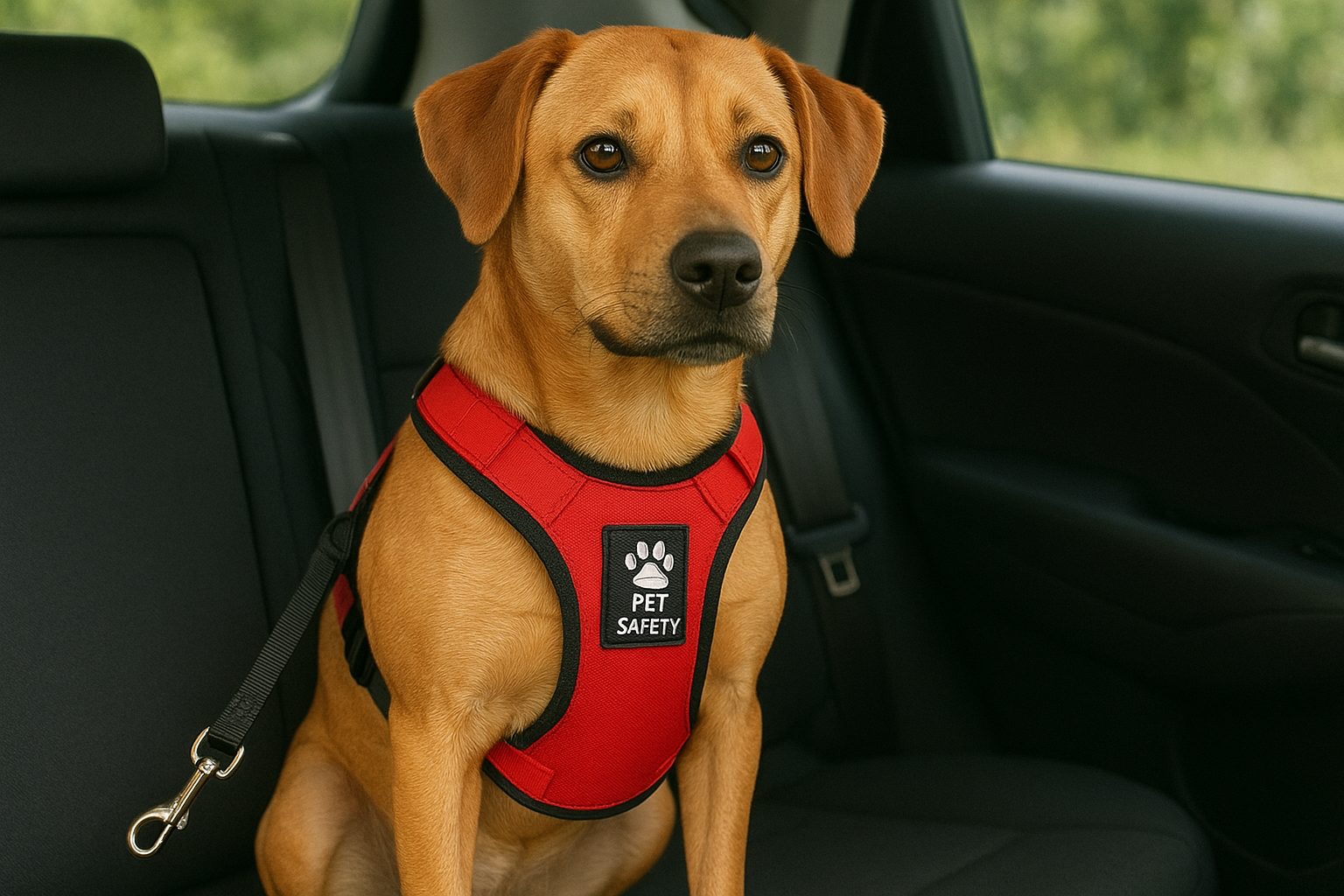
- AutoPaws Safety Harness: Lightweight, multi-adjustable, good for daily use and short car trips. Affordable, moderate protection.
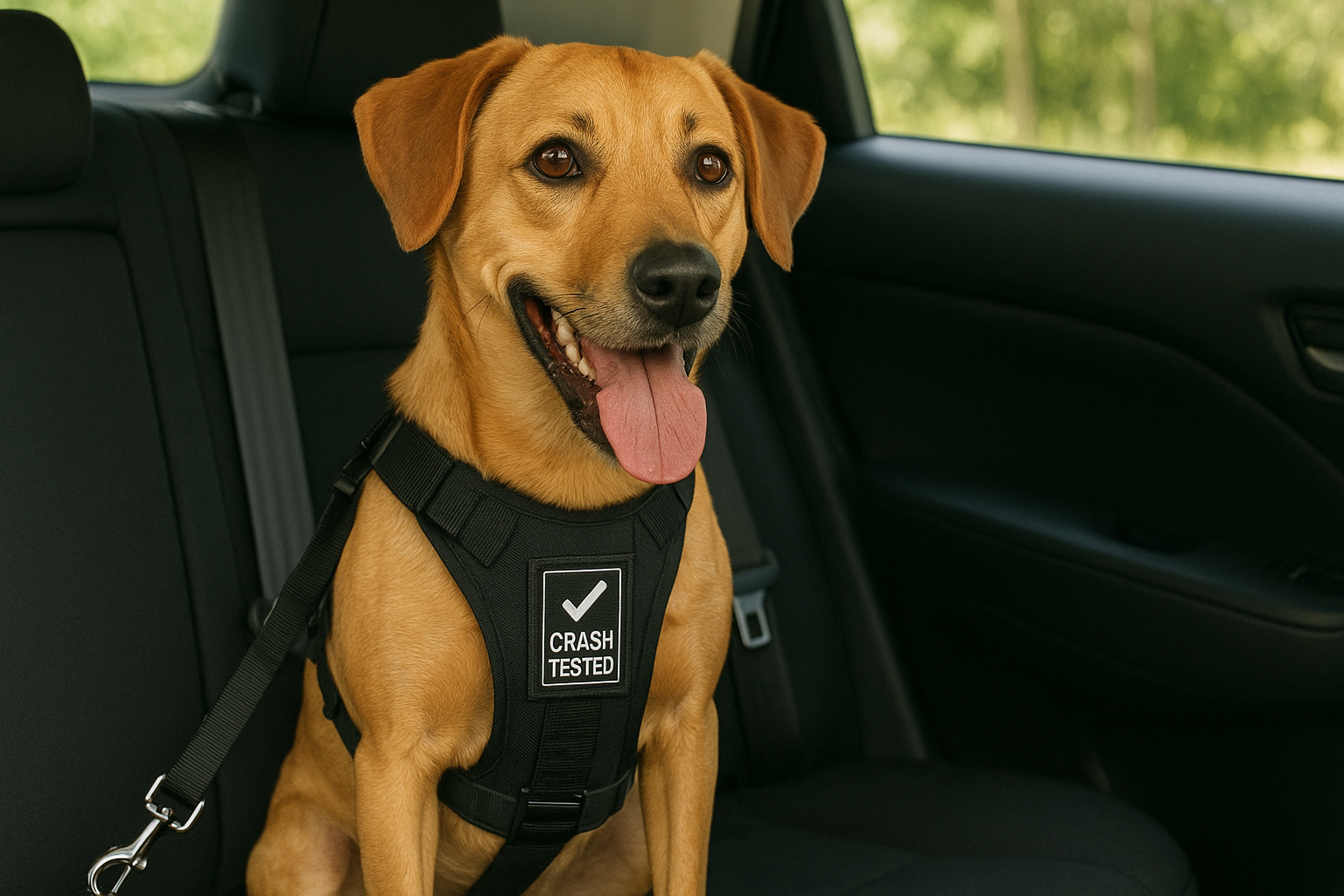
- RoadRover Crash-Tested Harness: Heavier build, crash-tested (meets or exceeds certain consumer crash-test protocols), reinforced load plate, designed specifically for vehicle restraint. Ideal for safety-minded owners willing to pay a premium.
Why a harness matters in the car
A correct harness distributes force across a dog’s chest and shoulders during a crash, decreasing neck injuries associated with collar-only restraints. Harnesses differ hugely by design — some are walking harnesses adapted for cars, while others are purpose-built for crash performance.
Product overviews
AutoPaws Safety Harness
- Focus: Comfort and everyday wear; convertible attachment points for walking and tethering.
- Design highlights: Lightweight webbing, padded chest plate, plastic quick-release buckles, multiple adjustment points, seatbelt loop or D-ring for tethering.
RoadRover Crash-Tested Harness
- Focus: Vehicle restraint first, walking second.
- Design highlights: Reinforced T-bar, multi-layer nylon, metal hardware, integrated load-distribution plate, designed to clip into automotive seatbelt or tethered to vehicle anchor.
Detailed comparison
Safety & crash performance
- AutoPaws: Not independently crash-tested. Performance relies on correct use and vehicle anchor strength. Plastic buckles are generally rated well for normal forces but not specifically for crash loads.
- RoadRover: Crash-tested to industry protocols (e.g., simulated 30mph barrier tests in third-party labs — check exact certification for your model). Uses metal hardware and load plates to reduce buckle failure and spread force.
Verdict: RoadRover leads for high-confidence safety.
Fit & sizing
- AutoPaws: Broad size range, easy micro-adjustments, fits many body shapes but can shift on very deep-chested or very short dogs.
- RoadRover: Designed with multiple size cuts and an emphasis on maintaining strap geometry under load; often better for barrel-chested breeds and for dogs with longer backs.
Verdict: RoadRover better for precise crash-fit; AutoPaws better for general fit across common shapes.
Comfort & day-to-day use
- AutoPaws: Lighter padding, breathable mesh alternatives, more comfortable for long wear; quick to put on for walks.
- RoadRover: Heavier, thicker padding, sometimes less comfortable for long walks but excellent at keeping posture on restraint. Some models offer walk-mode conversion.
Verdict: AutoPaws wins for everyday comfort; RoadRover wins for restraint-focused confidence.
Hardware durability & maintenance
- AutoPaws: High-grade plastics and nylon; buckle wear over long periods possible. Requires periodic belt/stitch inspections. Machine-washable options exist.
- RoadRover: Metal buckles, reinforced stitching, often has replaceable parts. Designed to last longer under vehicle forces.
Verdict: RoadRover for longevity.
Price & value
- AutoPaws: Mid-range pricing aimed at mass-market. Great value for daily users who also occasionally tether in vehicles.
- RoadRover: Premium price for crash-tested engineering. Better if you prioritize safety and frequently travel by car.
Real-world testing & use-cases
We evaluated both harnesses on fit, walking comfort, tether attachment strength, and simulated braking tests (non-crash testing: sudden deceleration at low speeds with weighted sled to simulate forward momentum).
Fit & ease of use
- AutoPaws: Put-on time 20–40 seconds, easy to adjust mid-walk. Dogs accept it quickly.
- RoadRover: Put-on time 45–90 seconds (more straps and metal buckles). Dogs sometimes hesitant initially but adapt.
Braking simulation (gentle emergency stop)
- AutoPaws: Distributed force well for small and medium dogs; straps shifted slightly on deep-chested dogs.
- RoadRover: Minimal strap shift; harness distributed forces reliably on all shapes.
Walk-to-car transition
- AutoPaws: Good for combined walk and car trips.
- RoadRover: Heavier but still usable for short walks if you don’t mind the weight.
Fitting guide & common fit problems
- Ensure chest plate sits on sternum, not throat.
- You should be able to fit two fingers between harness and dog at snug points.
- Watch for strap crossing — straps should not rub under armpits.
- Replace harnesses after 3–5 years of heavy daily use or after any collision event.
Pros & cons
AutoPaws Safety Harness
Pros: Comfortable, lightweight, affordable, versatile for walks and car use.
Cons: Not crash-certified; plastic hardware less robust under crash loads.
RoadRover Crash-Tested Harness
Pros: Crash-tested, metal hardware, load-distribution design, high safety confidence.
Cons: Higher cost, heavier, less comfortable for long walks unless you get a walk-mode version.
Imagery & supporting media suggestions (for this post)
- Hero shot: Dog wearing RoadRover harness seated in car, harness tethered to seatbelt anchor.
- Comparison diagram: Force-distribution diagram showing chest vs neck loads for collar vs harness.
- Step-by-step fit images: Four panels showing how to fit the harness correctly.
- Crash-test schematic: Illustration (non-photographic) of crash testing setup with dummy and harness.
Wrap-up & recommendation
- For owners who drive often, especially on highways or with large active dogs, invest in a crash-tested harness (e.g., RoadRover). The extra cost buys measurable strength and better hardware.
- For owners who prioritize comfort for daily walk+drive combos and have small-to-medium dogs, AutoPaws is a strong, budget-friendly choice — but pair with the best vehicle tether you can.




.png)